Everyday Movement for Balance and Strength After 60

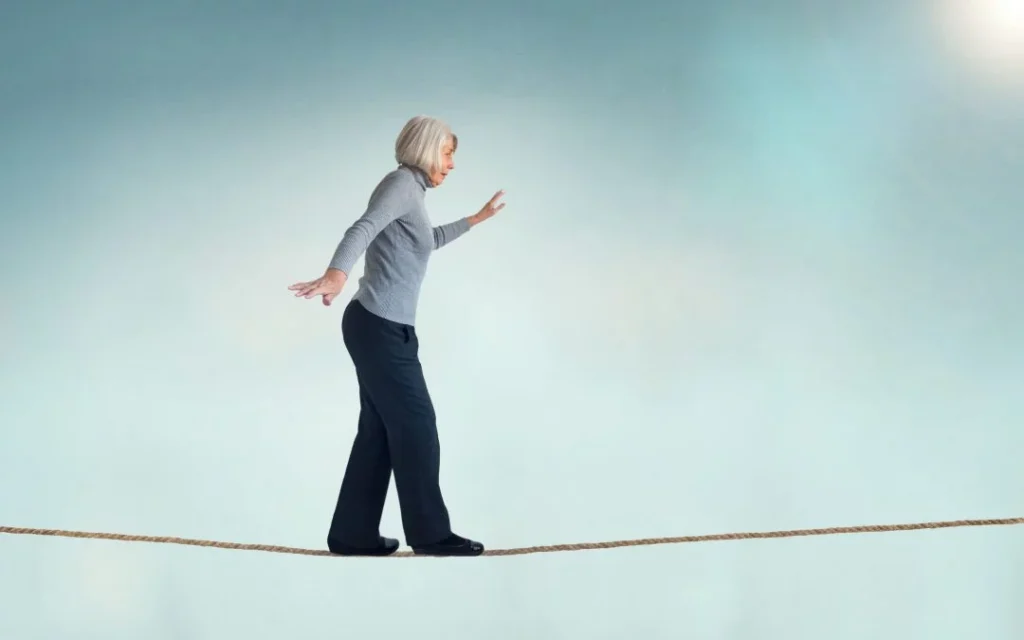
Many of my patients over 60 tell me the same thing in different words: they want to stay steady on their feet and keep doing things on their own. They want to carry groceries, get up from a low chair, step off a curb and play with grandchildren without worrying about a fall.
That worry makes sense. Studies estimate that somewhere between about one in five and one in three older adults living at home fall each year 12. Falls are associated with injuries, fractures, and lower day-to-day function and quality of life 2.
The encouraging part is that balance and strength can often be trained, even later in life. In this post I'll go over what the research says about balance exercises for seniors, how simple daily movement fits in, and how to keep active indoors when our desert summers make outdoor walks impractical.
Why balance and strength change with age
Falls rarely have one single cause. A large review in JAMA describes falls as the result of normal age-related changes in the body combined with other risk factors 3. Common risk factors that may be changeable include 3:
- Gait and balance problems (gait means the way you walk)
- Orthostatic hypotension, a drop in blood pressure when you stand up that can make you feel lightheaded
- Vision, hearing or other sensory changes
- Medications that can affect alertness, blood pressure or steadiness
- Hazards at home, such as loose rugs, poor lighting or clutter
Muscle matters too. Many people lose muscle mass and strength as they age. When that loss becomes significant it is called sarcopenia, and it is recognized as a serious public health concern among older adults 4. Weaker legs can make it harder to recover your footing after a stumble.
This is why exercises that work on balance, walking and muscle strength have become a main focus of fall prevention research 1.
What the research shows
The evidence here is among the strongest we have in preventive medicine for older adults.
A Cochrane review, a highly regarded type of study that pools results from many trials, looked at exercise in people aged 60 and older living in the community. It found that exercise reduced the rate of falls by about 23% and reduced the number of people who fell at least once by about 15%, with high-certainty evidence 1.
The type of exercise appears to matter 5:
- Balance and functional exercises (movements that resemble daily tasks, like standing up from a chair or stepping) reduced the rate of falls by about 24%.
- Combining several types, usually balance and functional work plus resistance (strength) exercise, probably reduced falls by about 34%.
- Tai Chi may reduce falls by about 19%, although the evidence is less certain.
- For programs built mainly around walking, dance or strength training alone, the effect on falls is uncertain.
The same review found larger benefits when programs were delivered by a health professional, usually a physical therapist 5. An earlier analysis found greater effects from programs that truly challenged balance and added up to more than about three hours per week 6. That doesn't mean you need to start there, but it suggests that steady, regular practice may count for more than an occasional session.
Strength training has benefits beyond falls. A review of studies in adults 60 and older found that resistance training was associated with better muscle strength, physical function and several aspects of quality of life, along with fewer depressive symptoms, although the authors called this evidence preliminary 7. In people with sarcopenia, combinations of resistance and balance exercise were among the most effective approaches for improving walking speed 4. In older women with osteoporosis (thinning bones), programs that mixed strength, balance and other types of exercise were associated with better strength and balance and a lower risk of falls 8.
Small, everyday movement counts
Many people picture exercise as a gym class or a long walk. Research on short bouts of activity spread through the day, sometimes called exercise snacks, suggests another way to get there. In one trial, older adults who were starting to lose strength and balance followed a home-based program of brief strength and Tai Chi sessions. After 12 weeks they showed better leg strength, balance and mobility than a comparison group, and participants described the program as accessible 9.
Here are some simple ways people often build balance and strength into ordinary days. Ask your doctor first which of these suit you:
- Sit-to-stand: rise from a sturdy chair without using your hands if you can, then sit back down slowly.
- Heel and toe raises while holding the kitchen counter, perhaps while the kettle heats.
- Standing on one foot briefly while lightly holding a counter or the back of a sturdy chair.
- Heel-to-toe walking along a hallway, with a wall within reach.
- Taking the stairs with a hand on the rail, if stairs are safe for you.
- Carrying light groceries or doing gardening and housework that involve bending, reaching and lifting.
National guidance also supports staying active at every age. The federal Physical Activity Guidelines for Americans include recommendations for older adults 10, and an international expert group has published consensus exercise recommendations aimed at healthy aging 11.
Staying active in the desert heat
During the hottest months, a midday walk outdoors is often neither comfortable nor wise. The good news is that the forms of exercise with the strongest evidence for fall prevention, balance and functional exercises, don't need much space or equipment 5. Many can be done in a living room or kitchen.
Some indoor-friendly ideas:
- A short routine at home of chair stands, heel raises and supported balance practice, done once or several times a day.
- Tai Chi from a class, video or community program, which can be practiced in a small indoor space 5.
- Light resistance bands for arm and leg strength, if your doctor or therapist agrees they're suitable for you.
- Indoor walking in an air-conditioned mall, community center or large store, early in the day.
- Group classes at a senior center or gym, which add social connection and someone to guide your form.
If you do head outside, many people find early morning or evening more comfortable. Drink enough fluids, and come inside if you feel unwell. Ask your doctor whether your health conditions or medications call for extra caution in the heat.
Start with a conversation
Before you begin a new routine, it's worth talking with your doctor, especially if you've fallen recently, feel unsteady, get dizzy when standing, or live with heart, lung, joint or nerve conditions.
Guidelines suggest that people who have fallen in the past year, who worry about falling, or who walk more slowly than expected should receive fall prevention care 3. Your doctor may check your gait and balance using simple tests, such as how fast you walk or the Timed Up and Go test, which measures how long it takes to stand up from a chair, walk a short distance, turn, come back and sit down 12.
This visit can also cover things exercise can't fix alone. A careful review may include your medications, vision, feet and home safety. In studies, cataract surgery, foot care programs and home changes for people at higher risk have each been associated with fewer falls 3. Please don't change or stop any medication yourself. If you're concerned that one might be affecting your balance, bring it up with your doctor.
In my own practice, this is the kind of conversation that longer visits leave room for: walking through daily habits, looking at what feels hard, and building a plan that fits the person.
Conclusion
Staying steady and independent after 60 usually comes from small, regular habits more than any single program. The research consistently suggests that exercise, especially exercise that challenges balance and adds some strength work, may lower the chance of falling 15. Short sessions at home can count, and much of it can be done indoors when the weather turns hot 9.
Start small, start safely, and include your doctor in the plan. You can find more about our approach to prevention on our wellness page. If you'd like a longer, unhurried conversation about your own balance and activity, you're welcome to contact the practice or read about our membership plans.
Frequently asked questions
Isn't walking enough to keep my balance?
Walking has many health benefits, but for fall prevention specifically, the research is uncertain about programs built mainly around walking. Balance and functional exercises, alone or combined with strength work, have stronger evidence 5. Many people do both.
Am I too old to benefit from balance exercises?
Age alone doesn't seem to rule out benefit. In the large Cochrane analysis, the effect of exercise on falls did not appear to differ for participants aged 75 and older 5. Your doctor can help you choose a safe starting point.
Does Tai Chi help with balance?
Tai Chi may reduce the rate of falls in older adults, though the evidence is less certain than for structured balance and functional exercise 5. Many people enjoy it, and it can be practiced indoors.
References
- Sherrington C, Fairhall NJ, Wallbank GK, et al.. Exercise for preventing falls in older people living in the community.. Cochrane Database Syst Rev. 2019. https://pubmed.ncbi.nlm.nih.gov/30703272/
- Pillay J, Gaudet LA, Saba S, et al.. Falls prevention interventions for community-dwelling older adults: systematic review and meta-analysis of benefits, harms, and patient values and preferences.. Syst Rev. 2024. https://pubmed.ncbi.nlm.nih.gov/39593159/
- Colón-Emeric CS, McDermott CL, Lee DS, et al.. Risk Assessment and Prevention of Falls in Older Community-Dwelling Adults: A Review.. JAMA. 2024. https://pubmed.ncbi.nlm.nih.gov/38536167/
- Shen Y, Shi Q, Nong K, et al.. Exercise for sarcopenia in older people: A systematic review and network meta-analysis.. J Cachexia Sarcopenia Muscle. 2023. https://pubmed.ncbi.nlm.nih.gov/37057640/
- Sherrington C, Fairhall N, Wallbank G, et al.. Exercise for preventing falls in older people living in the community: an abridged Cochrane systematic review.. Br J Sports Med. 2020. https://pubmed.ncbi.nlm.nih.gov/31792067/
- Sherrington C, Michaleff ZA, Fairhall N, et al.. Exercise to prevent falls in older adults: an updated systematic review and meta-analysis.. Br J Sports Med. 2017. https://pubmed.ncbi.nlm.nih.gov/27707740/
- Khodadad Kashi S, Mirzazadeh ZS, Saatchian V. A Systematic Review and Meta-Analysis of Resistance Training on Quality of Life, Depression, Muscle Strength, and Functional Exercise Capacity in Older Adults Aged 60 Years or More.. Biol Res Nurs. 2023. https://pubmed.ncbi.nlm.nih.gov/35968662/
- Linhares DG, Borba-Pinheiro CJ, Castro JBP, et al.. Effects of Multicomponent Exercise Training on the Health of Older Women with Osteoporosis: A Systematic Review and Meta-Analysis.. Int J Environ Res Public Health. 2022. https://pubmed.ncbi.nlm.nih.gov/36361073/
- Liang IJ, Perkin OJ, Williams S, et al.. The Efficacy of 12-Week Progressive Home-Based Strength and Tai-Chi Exercise Snacking in Older Adults: A Mixed-Method Exploratory Randomised Control Trial.. J Frailty Aging. 2024. https://pubmed.ncbi.nlm.nih.gov/39574284/
- Physical Activity Guidelines for Americans — Current Guidelines. Office of Disease Prevention and Health Promotion (HHS). 2025. https://odphp.health.gov/our-work/nutrition-physical-activity/physical-activity-guidelines/current-guidelines
- Izquierdo M, de Souto Barreto P, Arai H, et al.. Global consensus on optimal exercise recommendations for enhancing healthy longevity in older adults (ICFSR).. J Nutr Health Aging. 2025. https://pubmed.ncbi.nlm.nih.gov/39743381/
- Pereira CB, Kanashiro AMK. Falls in older adults: a practical approach.. Arq Neuropsiquiatr. 2022. https://pubmed.ncbi.nlm.nih.gov/35976297/
This article is for general education and is not medical advice. It does not create a doctor–patient relationship. Talk with your own physician before changing any medication, test schedule or treatment. If you think you are having a medical emergency, call 911.