Low Testosterone: What Testing Can and Cannot Tell You

Many of my patients ask whether they should "get their testosterone checked." It's a reasonable question. Testosterone affects much more than sexual health, and a blood test seems like a simple way to get an answer.
The test is useful, but a single number rarely tells the whole story. Testosterone levels change over the course of the day and can be affected by sleep and overall health. That's why major medical guidelines recommend diagnosing low testosterone (doctors call it hypogonadism) only when a man has symptoms and signs that fit and lab results that are clearly and consistently low 1.
In this post I'll explain what goes into low testosterone testing, why timing and repeat tests matter, and how physicians weigh symptoms and lab numbers together. My aim is to help you have a more informed conversation with your own doctor.
Testosterone follows a daily rhythm
Testosterone does not stay at one level all day. In healthy young men, blood testosterone follows a circadian rhythm, a natural roughly 24-hour cycle. It tends to be highest around waking and lowest before bedtime 2. In men with hypogonadism, both the overall level and this daily swing may be blunted 2.
This matters for testing. A sample drawn in the late afternoon may come back lower than one drawn in the morning, even in the same person. For that reason, both the Endocrine Society and the European Academy of Andrology recommend measuring total testosterone in the morning, while fasting, using an accurate, well-validated lab method 13.
If you've had a testosterone result from a random time of day or after a meal, it may still be useful. Your doctor may just want to look at it alongside a properly timed test before drawing conclusions.
Why one result is not enough
Even with good timing, a single low reading may not reflect your usual level. Guidelines recommend confirming a low result by repeating the morning fasting test 1. The European guidance likewise bases the diagnosis on repeatedly low morning levels 3.
There is also more than one way to measure testosterone:
- Total testosterone counts all the testosterone in your blood, including the portion attached to carrier proteins.
- Free testosterone is the small portion that is not bound to proteins.
- Sex hormone-binding globulin (SHBG) is one of the main proteins that carries testosterone in the blood. Some conditions raise or lower it, which can make total testosterone misleading.
When total testosterone is near the lower limit of normal, or when a man has a condition that affects SHBG, the Endocrine Society recommends checking free testosterone, either by a specialized method called equilibrium dialysis or by an accurate calculation 1.
A result that falls just outside the reference range calls for a closer look. On its own, it is not a verdict. I've written more about this in what an abnormal lab result really means.
Sleep and overall health play a role
Testosterone does not exist in isolation. It reflects how the rest of the body is doing.
Sleep. Obstructive sleep apnea is a condition in which the airway repeatedly narrows or closes during sleep. A meta-analysis that pooled 24 studies found that men with obstructive sleep apnea had significantly lower testosterone levels than men without it 4. Poor sleep is worth paying attention to for many reasons. If you're working on it, my post on practical steps for better sleep may help.
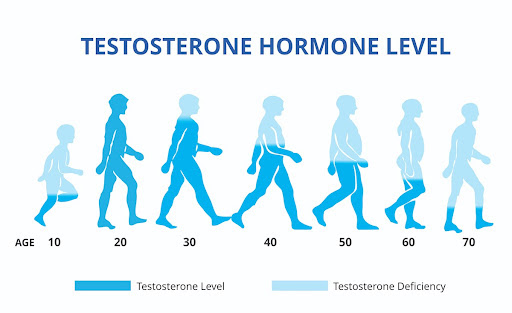
Age, weight and other conditions. Testosterone tends to decline with age 5, often alongside obesity and other chronic health conditions 6. Low testosterone has been linked to obesity, sleep apnea, depression, metabolic risk factors and several chronic diseases. Researchers stress that these links don't prove that low testosterone causes those conditions 5.
Medications and underlying causes. The European guideline describes a pattern called functional hypogonadism, in which testosterone is lowered by other health factors rather than by disease of the testes or pituitary gland. It recommends ruling out these "organic" causes first. It also recommends lifestyle changes and weight loss as the first approach for men who are overweight, and reviewing medicines that may interfere with testosterone production 3. Please don't change any medication on your own; that is a conversation to have with your doctor. When low testosterone is confirmed, guidelines also recommend further evaluation to find out why 1.
Weighing symptoms and lab numbers together
A low number without symptoms, or symptoms without a low number, usually doesn't add up to a diagnosis. Testosterone deficiency is defined as a low serum level together with consistent symptoms or signs 5, and the major guidelines take the same approach 13.
This two-part approach matters because the benefits of treatment are still being studied. A discussion of the American College of Physicians guideline notes ongoing controversy about the long-term benefits and risks of testosterone treatment in older men. The ACP recommends that clinicians discuss treatment with men who have age-related low testosterone and sexual dysfunction and want to improve sexual function. It recommends not starting treatment for energy, vitality, physical function or cognition 6.
A confirmed diagnosis can also raise other health questions. For example, testosterone deficiency may be associated with bone loss and frailty, and one guideline suggests that men with confirmed hypogonadism receive a bone health assessment 7. This is one reason I see testosterone testing as part of a broader look at a man's health, not as a stand-alone number.
Getting the most from your visit
If you and your doctor decide testing makes sense, a little preparation can make the results easier to interpret:
- Ask whether your test should be done in the morning and while fasting.
- Note how you slept the night before, and mention any snoring, pauses in breathing or daytime sleepiness.
- Bring a complete list of your medications and supplements.
- Describe your symptoms specifically: what changed, when it changed and how much it bothers you.
- Ask whether a repeat test or a free testosterone measurement would add useful information.
These details help your physician put a lab value in context. Good care depends on that context.
Conclusion
Testosterone testing can be valuable, but it works best as part of a bigger picture. Levels vary with the time of day, can be affected by sleep and overall health, and usually need confirming with a repeat morning test. Lab numbers mean the most when they're weighed alongside your symptoms, your history and your goals.
In my practice, longer visits give us time to talk through results like these rather than reacting to a single number. Whoever your physician is, I'd encourage you to bring your questions and decide on testing or treatment together with them. If you'd like to read more about building healthy habits, our wellness and prevention page is a good place to start.
Frequently asked questions
Does it matter what time of day my testosterone is tested?
Yes, it can. Testosterone tends to be highest around waking and lower later in the day 2, so guidelines recommend a morning, fasting test using a reliable lab method 13. Ask your doctor how and when your test should be done.
I had one low result. Does that mean I have low testosterone?
Not necessarily. Guidelines recommend confirming a low result with a repeat morning fasting test, and they base the diagnosis on symptoms as well as lab values 13. Your doctor can help you decide on next steps.
What does free testosterone add?
Free testosterone measures the portion not bound to carrier proteins. It may be useful when total testosterone is borderline or when a condition affects the binding protein SHBG 1. Whether you need it is a question for your doctor.
References
- Bhasin S, Brito JP, Cunningham GR, et al.. Testosterone Therapy in Men With Hypogonadism: An Endocrine Society Clinical Practice Guideline.. J Clin Endocrinol Metab. 2018. https://pubmed.ncbi.nlm.nih.gov/29562364/
- Smolensky MH, Hermida RC, Sackett-Lundeen L, et al.. Does Patient-Applied Testosterone Replacement Therapy Pose Risk for Blood Pressure Elevation? Circadian Medicine Perspectives.. Compr Physiol. 2022. https://pubmed.ncbi.nlm.nih.gov/35950658/
- Corona G, Goulis DG, Huhtaniemi I, et al.. European Academy of Andrology (EAA) guidelines on investigation, treatment and monitoring of functional hypogonadism in males: Endorsing organization: European Society of Endocrinology.. Andrology. 2020. https://pubmed.ncbi.nlm.nih.gov/32026626/
- Wang H, Lu J, Xu L, et al.. Obstructive sleep apnea and serum total testosterone: a system review and meta-analysis.. Sleep Breath. 2023. https://pubmed.ncbi.nlm.nih.gov/35904664/
- Buvat J, Maggi M, Guay A, et al.. Testosterone deficiency in men: systematic review and standard operating procedures for diagnosis and treatment.. J Sex Med. 2013. https://pubmed.ncbi.nlm.nih.gov/22971200/
- Libman H, Cohen ML, Irwig MS, et al.. How Would You Manage This Male Patient With Hypogonadism? : Grand Rounds Discussion From Beth Israel Deaconess Medical Center.. Ann Intern Med. 2021. https://pubmed.ncbi.nlm.nih.gov/34370516/
- Rochira V, Antonio L, Vanderschueren D. EAA clinical guideline on management of bone health in the andrological outpatient clinic.. Andrology. 2018. https://pubmed.ncbi.nlm.nih.gov/29499097/
This article is for general education and is not medical advice. It does not create a doctor–patient relationship. Talk with your own physician before changing any medication, test schedule or treatment. If you think you are having a medical emergency, call 911.